
Rekeying vs. Replacing Locks: A Guide for Denver and Lakewood Homeowners
Deciding between rekeying vs. replacing locks in Denver or Lakewood? Start with two questions: does the lock work properly, and who might still have a key? Rekeying changes which key opens an existing lock. Replacement changes the hardware itself. The right choice depends on the condition of your doors, your access needs, and the total cost of the work.
Quick answer: Consider rekeying when your locks are in good condition but you need to retire old keys. Consider replacement when hardware is damaged, unreliable, or no longer offers the features you want. A sticking door may need an alignment repair, so have the cause checked before buying new locks.
Rekeying vs. replacing locks: what changes?
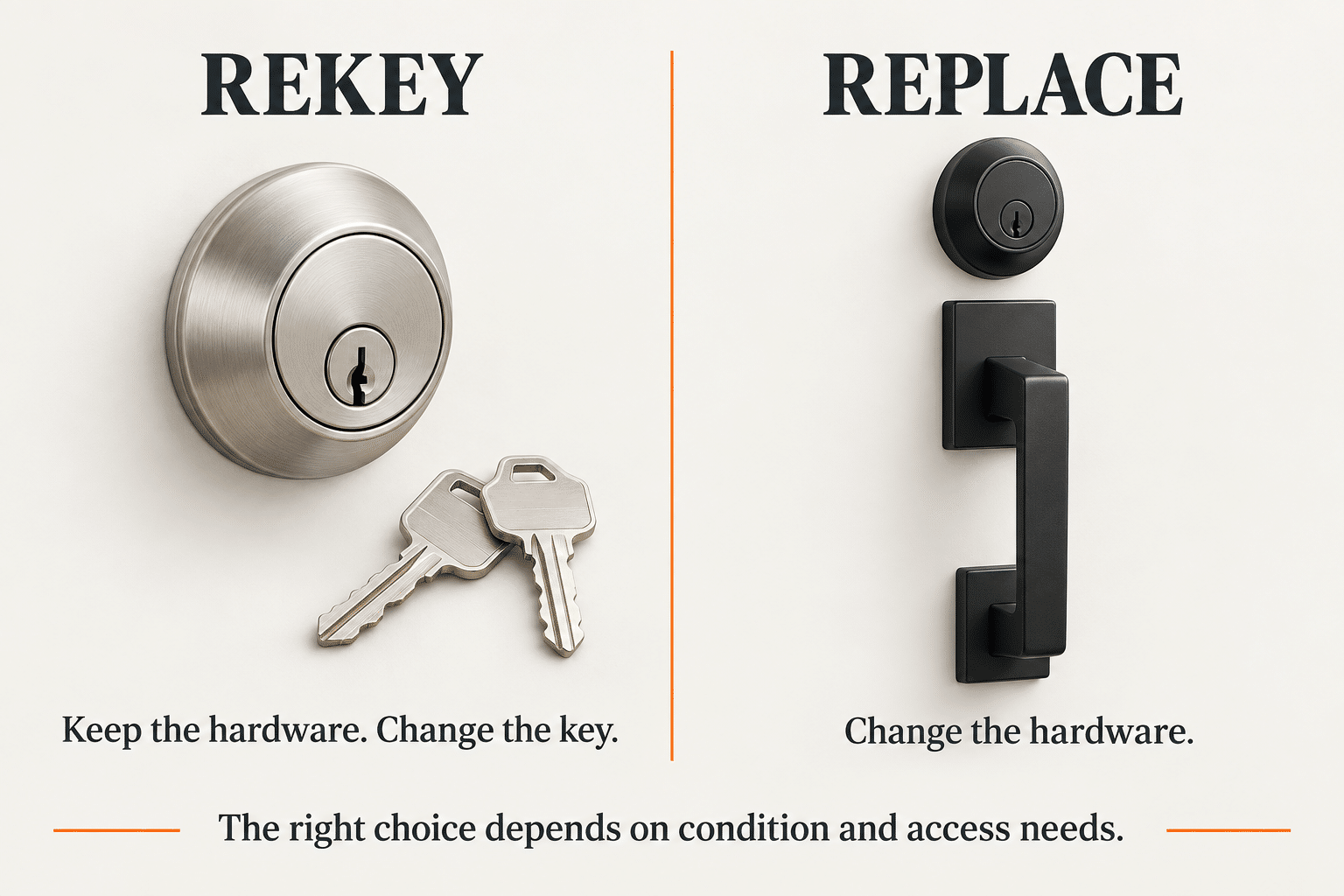
With a conventional rekey, a locksmith adjusts the lock cylinder to accept a different key. The outside hardware can stay in place, and the previous key no longer operates the rekeyed cylinder. This addresses key access; it does not repair a damaged door or automatically make an older lock stronger.
Replacement involves fitting new lock hardware. It can solve a hardware problem or add a different finish, keypad, or other feature. However, a new lock still needs a sound door, a secure frame, and correct installation to work well. Our residential locksmith services include lock repair, installation, and rekeying.
When does rekeying make sense?
Rekeying is worth considering after you move into a home or lose track of spare keys. Even if a previous owner hands over several copies, you may not know whether others exist. Changing the key access gives you a fresh starting point without necessarily replacing working hardware.
It may also simplify daily use if you currently carry separate keys for several exterior doors. Ask whether the cylinders are compatible with one shared key. Different brands or keyways may prevent that arrangement without replacing some hardware.
When should you replace a lock?
Consider replacement if a lock has broken components or cannot operate reliably after an assessment. You might also choose new hardware to add keyless entry or change how the door is used. Before selecting a product, check its fit and operation with your existing door.
If you must push or lift the door to turn the key, tell the locksmith. The problem could involve the hinges, frame, or strike plate rather than the cylinder. Replacing the lock alone may leave the underlying issue unresolved.
Rekeying vs. replacing locks: cost factors in Denver and Lakewood
Compare complete estimates for your home rather than a headline price per lock. The total can depend on the number and type of cylinders, whether working keys are available, the replacement hardware selected, and any door repairs required. Ask about service-call charges, labor, extra keys, and any applicable fees before approving work.
Keeping usable hardware can reduce the need to buy new parts, but rekeying is not always the lowest-cost option. Ask for both options when the difference is unclear. Photos of the lock and door edge can help explain the job, although the final recommendation may require an on-site inspection.